November | 2026
New Perspectives on Pulsatile Tinnitus
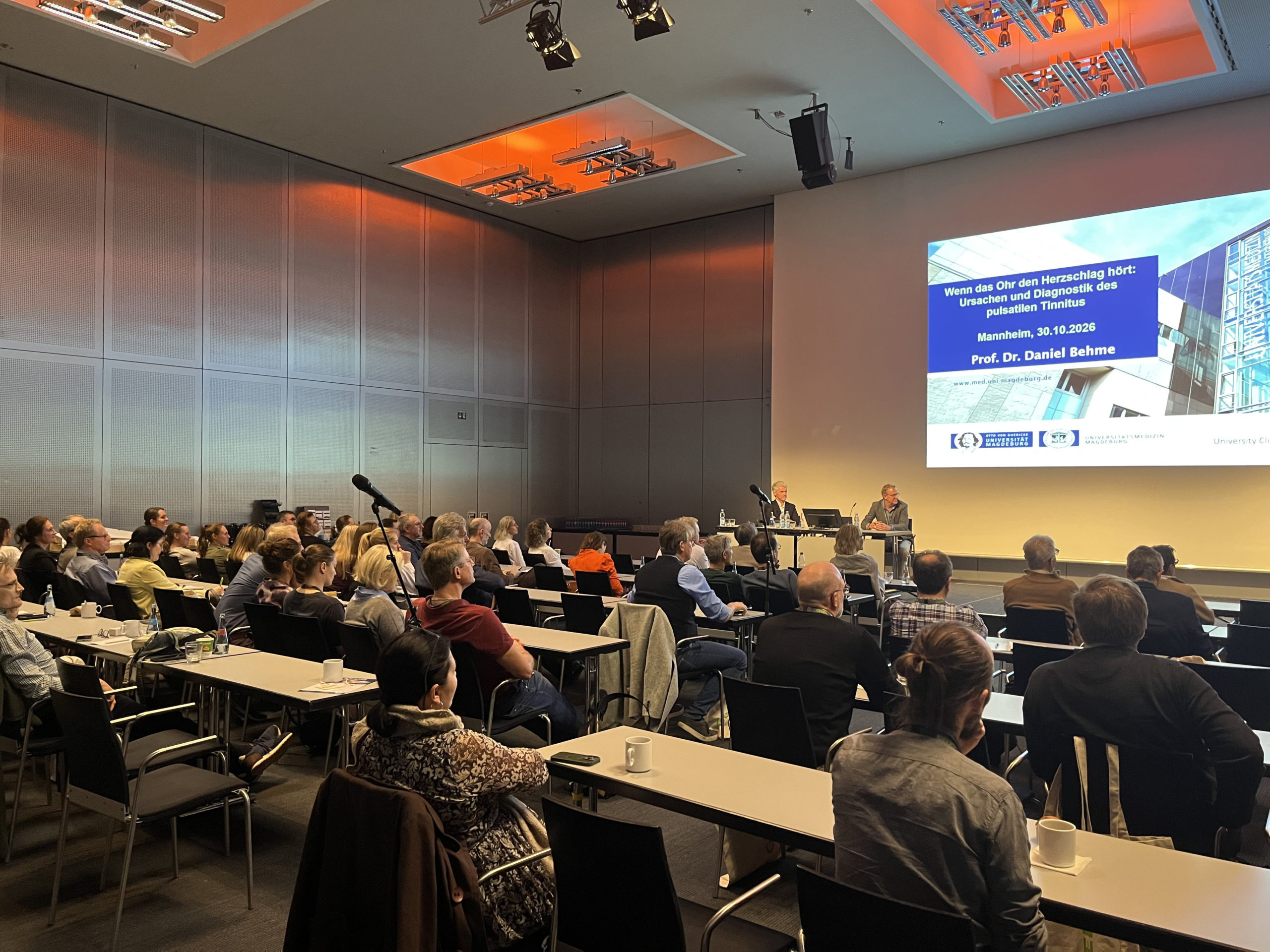
Pulsatile Tinnitus in Focus at the 2026 ENT Congress
Pulsatile tinnitus was a key topic at the first Acandis Symposium held during the 2026 ENT Congress in Mannheim. Renowned experts in otolaryngology, neuroradiology, and neurointervention discussed the latest insights into vascular causes, advanced diagnostic approaches, and emerging treatment strategies for pulse-synchronous tinnitus.
Many patients experience a long and often frustrating journey before receiving the correct diagnosis. Growing scientific evidence suggests that pulsatile tinnitus is frequently associated with an identifiable and potentially treatable underlying condition. This highlights the importance of close collaboration between ENT specialists, neuroradiologists, and neurointerventional physicians in ensuring accurate diagnosis and appropriate patient management.
Recognising Vascular Causes Early
In his presentation on the diagnosis of vascular causes of pulsatile tinnitus, Prof. Dr. Daniel Behme emphasised the importance of a thorough medical history and targeted imaging studies.
One of the first and most important diagnostic steps is determining whether the perceived sound is truly synchronous with the patient’s heartbeat. Patient-reported symptoms can provide valuable clues and may already point towards an underlying vascular origin.
Among the most common vascular causes are abnormalities of the cerebral venous sinuses, particularly stenoses of the transverse and sigmoid sinuses. Other important differential diagnoses include dural arteriovenous fistulas, while rarer conditions such as paragangliomas must also be considered.
For diagnostic work-up, Dr Behme highlighted the value of combining high-resolution MRI with CT imaging of the temporal bone. A comprehensive imaging approach is essential for reliably identifying the underlying cause and guiding further treatment decisions.
When Blood Flow Becomes Audible
In his lecture, PD Dr. Hannes Nordmeyer focused on therapeutic and interventional options for venous causes of pulsatile tinnitus.
A key topic was the development of turbulent blood flow within narrowed venous sinuses. Under certain anatomical conditions, these flow disturbances can generate sound that is transmitted to the inner ear and perceived as a pulse-synchronous tinnitus.
Such abnormalities are most commonly associated with venous sinus stenosis. The well-established relationship between pulsatile tinnitus and idiopathic intracranial hypertension (IIH) was also discussed in detail, highlighting the need for comprehensive assessment of venous pathology in affected patients.
Modern Treatment Approaches for Venous Sinus Stenosis
For selected patients whose pulsatile tinnitus can be attributed to a lateral venous sinus stenosis, novel treatment approaches may offer a therapeutic option. The aim is to improve venous blood flow and eliminate the associated flow disturbances. The speakers also provided insights into ongoing international clinical studies investigating these treatment approaches.
Several case presentations demonstrated how targeted diagnostics and individualised treatment strategies can help address the underlying cause of pulsatile tinnitus.
Advancing Patient Care Through Interdisciplinary Collaboration
The Acandis Symposium at the 2026 ENT Congress highlighted the importance of increasing awareness of vascular causes of pulsatile tinnitus. As many patients initially seek help from ENT specialists, close interdisciplinary collaboration and advanced imaging play a crucial role in identifying treatable underlying conditions and expanding therapeutic options.
The symposium demonstrated how ENT evaluation, neuroradiological imaging, and neurointerventional expertise can work together to support accurate diagnosis and personalised treatment strategies.
We are proud to contribute to this important scientific dialogue and to support the exchange of knowledge across specialities, helping to advance care for patients living with pulsatile tinnitus.
We would like to extend our sincere thanks to Prof. Dr. Christian Dobel, Prof. Dr. Daniel Behme, and PD Dr. Hannes Nordmeyer for their insightful presentations, as well as to all participants for the valuable discussions and exchange of expertise in Mannheim.